HNB Aerosol Generation Principle & Technology | HEATX Official Guide
How Does HNB Technology Generate Aerosol? Complete Scientific Mechanism & HEATX Technical Optimization
1. Overview of HNB Heating Principle
Heat-Not-Burn (HNB) technology creates inhalable aerosol through precise low-temperature heating instead of traditional tobacco combustion. As a leading HNB device brand, 열x optimizes core heating physics and chemical reactions to deliver stable, pure, and flavour-consistent aerosol without open flame and high-temperature burning. Compared with traditional cigarettes, HNB heating effectively avoids excessive thermal decomposition and greatly reduces harmful byproducts.
2. Fundamental Physical Principles
2.1 Heat Conduction & Convection
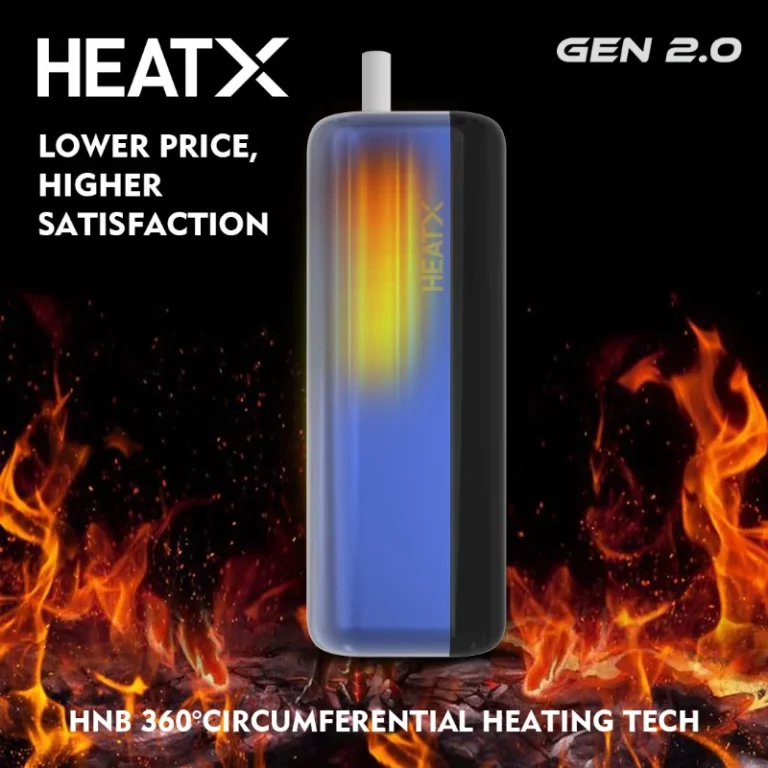
HNB heating systems rely on two major heat transfer methods: conduction and convection. HEATX heating devices adopt optimized heating contact structures to deliver uniform heat conduction while forming stable circulating hot airflow inside the heating chamber. This dual heat transfer method ensures every part of the botanical or tobacco stick is heated evenly, avoiding local overheating or insufficient heating.
2.2 Vaporization & Volatilization
Standard HNB vaporization temperature ranges from 200°C to 350°C, far lower than the 800°C combustion temperature of traditional cigarettes.HEATX constant-temperature heating technology precisely locks the optimal volatilization temperature range, enabling full release of nicotine and natural flavor substances without burning the substrate.
2.3 Aerosol Formation
Vaporized flavor and nicotine substances condense in the air to form fine aerosol droplets. HEATX thermal balance design optimizes vapor condensation efficiency, producing smoother, finer, and more stable aerosol for a consistent throat hit and pure flavor.
3. Scientific Theoretical Basis
3.1 Thermodynamic Principles
HNB heating follows the Fourier heat conduction formula $$q=-k\nabla T$$ and latent heat of vaporization formula $$Q=m\cdot L_v$$. HEATX intelligent temperature control algorithm dynamically adjusts heat output according to real-time temperature gradients, ensuring stable energy absorption and complete vaporization.
3.2 Fluid Mechanics
Aerosol droplet formation is governed by Reynolds number and Ohnesorge number, while vapor diffusion follows Fick’s Law. HEATX internal airflow structure optimizes vapor diffusion speed and droplet uniformity, avoiding thin smoke or inconsistent flavour.
3.3 Thermal Chemical Reactions
Low-temperature heating triggers mild and controlled thermal decomposition. Proper generation of trace organic compounds enriches tobacco flavor. HEATX low-temperature constant heating mode suppresses excessive pyrolysis, maintaining clean aerosol components.
4. Key Influencing Factors
Heating temperature, heating duration, raw material composition, and device structure determine final aerosol quality. HEATX integrates precise temperature calibration, uniform heating structure, and intelligent timed heating to solve common industry problems such as burnt taste, unstable smoke volume, and incomplete flavor release.
5. Practical Technical Applications & HEATX Advantages
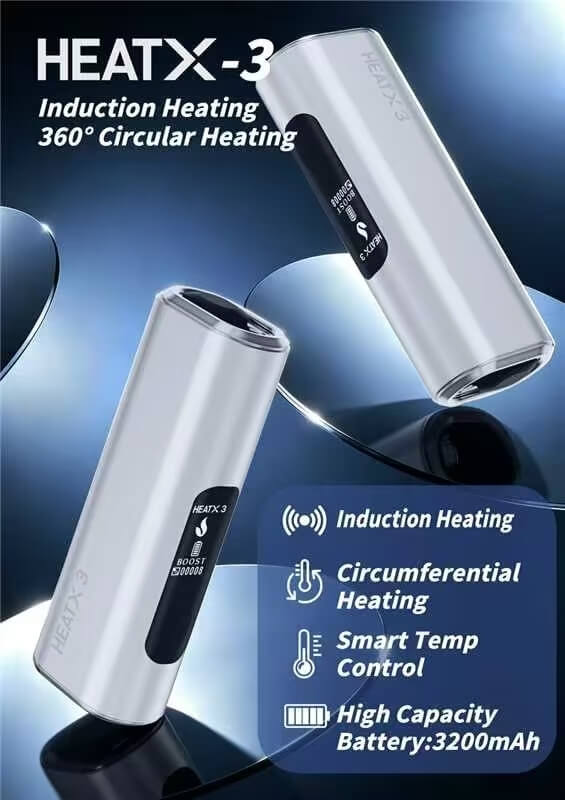
As a professional HNB heating device brand, HEATX focuses on structural optimization, temperature control innovation, and user experience upgrading. By adopting high-precision heating elements and real-time temperature feedback systems, HEATX devices maintain an optimal heating range of 200°C–400°C throughout the whole process, achieving stable aerosol output, pure flavor restoration, and excellent consistency from the first puff to the last.
6. Conclusion
HNB aerosol generation is a systematic technology combining thermodynamics, fluid mechanics, and thermal chemistry. With scientific low-temperature heating logic, HEATX professional HNB heating devices maximize the advantages of heat-not-burn technology, delivering purer, smoother, and more consistent inhalation experience while optimizing product safety and usability.